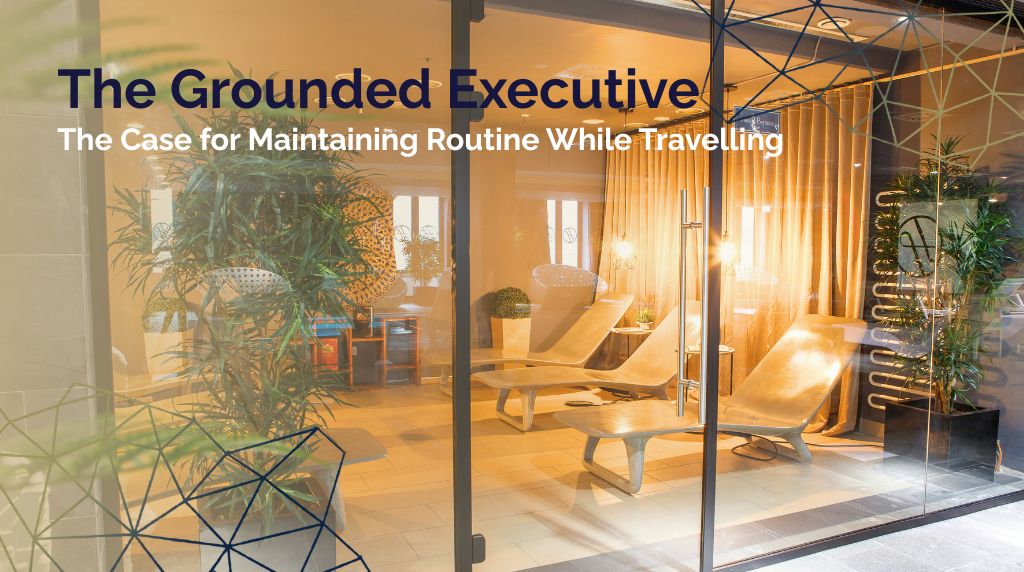

The inherent nature of corporate travel is disruption. It pulls executives from their established patterns of work, family, and personal wellness. The key to mitigating the resulting fatigue and loss of focus lies in a simple yet powerful strategy: maintaining routine while travelling. This is not about rigidly replicating a home schedule in a hotel room. Rather, it’s about creating small, intentional anchors of normalcy that provide stability in unfamiliar environments, allowing for greater presence, clearer decision-making, and a more sustainable approach to business on the move.
💼 Want to Take the Stress Out of Business Travel?
👉 Get started with a dedicated corporate travel specialist today.
Most corporate travel programmes focus exclusively on the logistical mechanics: flights, hotels, and cost containment. They treat the traveller as a parcel to be moved from Point A to Point B as efficiently as possible. This view overlooks a critical operational reality. When a traveller is fatigued, disoriented, or mentally taxed from constant disruption, their performance suffers. Strategic thinking dulls, negotiation skills weaken, and the overall return on the travel investment diminishes. The goal of a well-designed travel programme should be not just to move people, but to ensure they arrive prepared, focused, and capable of performing at their best. This is a core component of effective enterprise travel solutions.

“Travel can be demanding, but the way you move through it doesn’t have to be. Maintaining even a simple routine, whether it’s how you start your morning or how you wind down, creates a sense of stability that makes the entire journey feel more manageable.”
The human brain thrives on predictability. Routines reduce cognitive load by automating recurring decisions, freeing up mental energy for more complex tasks. When you travel, you are suddenly in an environment devoid of these automatic cues. The simple act of deciding where to get coffee, how to get to a meeting, or what to eat for dinner requires active thought, consuming valuable mental resources.
By establishing a few consistent habits, a traveller creates a personal framework of predictability. This structure acts as a psychological anchor, reducing feelings of disorientation and stress. It is not about control in a rigid sense, but about creating a stable internal environment when the external one is in flux. This sense of groundedness is the foundation upon which peak professional performance is built, especially under the pressures of a demanding business trip.
A sustainable on-the-road routine is built on four key pillars: sleep, movement, nutrition, and connection. Mastering these does not require a complete lifestyle overhaul. Instead, it involves small, deliberate actions that deliver a significant impact on wellbeing and performance.
Consistent, high-quality sleep is the most critical factor for cognitive function, mood regulation, and physical energy. Yet, it is often the first casualty of business travel. A disciplined approach to sleep hygiene can counteract the disruptive effects of new time zones and unfamiliar hotel rooms.
Long hours spent in airplane seats and meeting rooms lead to physical stagnation, which in turn contributes to mental fatigue. The goal is not to run a marathon but to counteract this inertia with consistent, light activity.
Business travel presents a minefield of poor nutritional choices, from airport fast food to heavy client dinners. Mindful eating on the road is not about deprivation but about making deliberate choices that sustain your energy levels rather than causing spikes and crashes.
The final pillar addresses mental and emotional wellbeing. Business travel can be isolating, and the pressure to be ‘always on’ can lead to rapid burnout. Creating routines around connection and disconnection is vital for long-term sustainability.
While all pillars are important, protecting your sleep schedule is the most critical. Consistent, quality sleep has the most significant downstream effect on cognitive function, mood, and energy levels. Even if other routines falter, prioritizing a consistent wind-down ritual and bedtime can make a substantial difference in your ability to perform effectively.
The key is gradual adaptation. Start adjusting your sleep and meal times by an hour or two in the days leading up to your departure. Once you arrive, immediately adopt the local time. Seek out natural daylight in the morning to help reset your circadian rhythm, stay hydrated, and avoid heavy meals or alcohol close to bedtime. A small, consistent effort is more effective than trying to force a sudden change.
Yes, indirectly but powerfully. A superior travel management company removes logistical stress. When a traveller is not worried about flight changes, hotel confirmations, or ground transport, they have more mental and emotional capacity to focus on their personal routine. A dedicated advisor who handles disruptions proactively provides a layer of stability that allows the traveller to stay grounded and in control of their own wellbeing.
Maintaining routine while travelling is an act of professional self-preservation. It is the framework that allows executives to absorb the inevitable disruptions of travel without sacrificing their health or performance. However, a personal routine can only thrive when it is built upon a foundation of reliable travel logistics. When flight changes, cancellations, or hotel issues arise, the stress can derail even the most disciplined traveller.
This is why a human-centric approach to Corporate Travel Management is so critical. Having a dedicated advisor who understands your preferences and can manage disruptions behind the scenes provides the ultimate stability. It frees you from the logistical chaos, allowing you to focus your energy where it matters most: on your performance, your wellbeing, and the routine that supports them both.
💡 Need help planning business trips? Work with a corporate travel agency that gets it. Inspired Travel Group handles every detail with expert care. Get Started Today!
