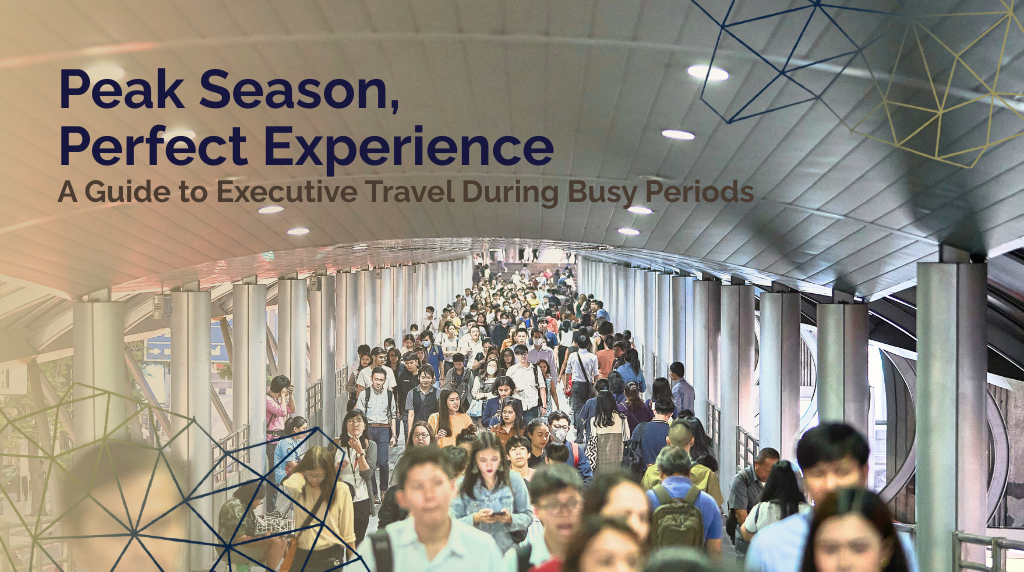

For senior leaders, the calculus of business travel is different. It is not about finding the cheapest fare; it is about protecting time, energy, and focus. This becomes critically important during high-demand travel periods. Navigating the complexities of executive travel peak season—such as spring break, summer, and year-end holidays—requires a strategic approach that prioritizes precision and seamless execution over reactive problem-solving. It demands a framework where every logistical detail is anticipated, and potential disruptions are mitigated long before the journey begins.
💼 Want to Take the Stress Out of Business Travel?
👉 Get started with a dedicated corporate travel specialist today.
Peak travel seasons amplify every potential point of friction. Airport lounges are crowded, flight schedules are volatile, and the best accommodations are the first to disappear. For an executive, this environment presents more than simple inconvenience; it poses a direct threat to productivity and well-being. A delayed connection is not just a few lost hours, it is a missed strategic meeting. An unavailable hotel room is not just a lodging issue, it is a disruption to the rest and preparation required for high-stakes performance. Standard corporate booking tools and volume-based travel agencies, which treat every trip as a simple transaction, are ill-equipped to manage these variables. They lack the foresight and personal accountability required to insulate a leader from the operational chaos of peak travel.
The foundation of a seamless peak season journey is built weeks, or even months, in advance. This is not about simply booking early; it is about architecting an itinerary with an understanding of the specific pressures of the season. A dedicated travel advisor, who manages a limited portfolio of clients, can provide this level of foresight.
Unlike an anonymous call centre agent or a self-serve portal, a dedicated advisor understands the executive’s travel patterns, preferences, and strategic objectives. This relationship allows for:
It is important to understand the structural incentives at play. Traditional travel management companies (TMCs) often operate on a transaction fee model. They profit from every booking, and often, from every change. During a volatile peak season, this model inadvertently incentivizes churn and complexity. A fixed management fee structure, by contrast, aligns the TMC’s goals with the client’s. The objective becomes getting the itinerary right the first time, as changes and disruptions represent a cost, not a revenue opportunity.
During peak seasons, premium inventory is the first to vanish. This includes business-class seats on desirable routes, executive suites with specific amenities, and access to private airport services. Waiting for standard availability to appear on a public booking engine is a losing strategy.
A high-touch travel management partner acts as a procurement specialist, using global distribution systems (GDS), private contracts, and personal contacts to secure these assets. This can involve:
Beyond logistics, this level of service extends to the traveler’s time on the ground. A well-designed itinerary can balance productivity with restoration, incorporating curated experiences—like a private museum tour or a reservation at a sought-after restaurant—that would be impossible to secure at the last minute.
Technology is a valuable tool for organization. An app like our Tripscape App can keep a complex itinerary, documents, and real-time updates in one accessible place. However, when a disruption occurs during a high-traffic period, technology alone is insufficient. Navigating a flight cancellation when every other plane is full cannot be solved by an app. It requires human intervention.
This is where the value of a dedicated, 24/7 support system becomes clear. Not a call centre routing you to the next available agent, but direct access to an in-house expert who knows the itinerary and has the authority to make immediate decisions. This professional can:
This level of support transforms travel from a source of stress into a controlled, productive component of an executive’s responsibilities.
For peak seasons, we recommend beginning the planning process 3 to 6 months in advance. This is not just for flights and hotels, but for securing restaurant reservations, event access, and specific ground transport. This lead time allows an advisor to architect the itinerary for optimal efficiency rather than simply reacting to limited availability. The goal is to control the variables before they become challenges.
A booking portal is a tool for executing a known request. A dedicated advisor is a strategic partner for managing complexity and risk. During peak season, their value lies in their ability to anticipate problems, leverage supplier relationships to unlock unavailable inventory, and provide immediate, expert intervention during a disruption. A portal cannot negotiate on your behalf or reroute a multi-leg itinerary during a system-wide meltdown.
This is where the model proves its worth. With our 24/7 in-house support, the executive makes one call to their dedicated advisor or our support line. That expert immediately takes ownership of the problem, rebooking flights, and coordinating all downstream changes to hotels and transport. Because our fee is fixed, our only incentive is to resolve the situation as efficiently as possible, unlike models that may charge for every change.
Successfully navigating executive travel peak season is not a matter of luck or finding a clever booking hack. It is the result of a deliberate, strategic partnership with a travel management team that understands the unique demands of leadership. By prioritizing proactive planning, securing premium access through established relationships, and backing every journey with expert human support, companies can ensure their most critical personnel travel with the same level of efficiency and control they exercise in the boardroom. It is an investment in performance, not an expenditure on logistics. For organizations that require this level of precision, exploring enterprise travel solutions is the first step toward mastering travel in any season.
💡 Need help planning business trips? Work with a corporate travel agency that gets it. Inspired Travel Group handles every detail with expert care. Get Started Today!
