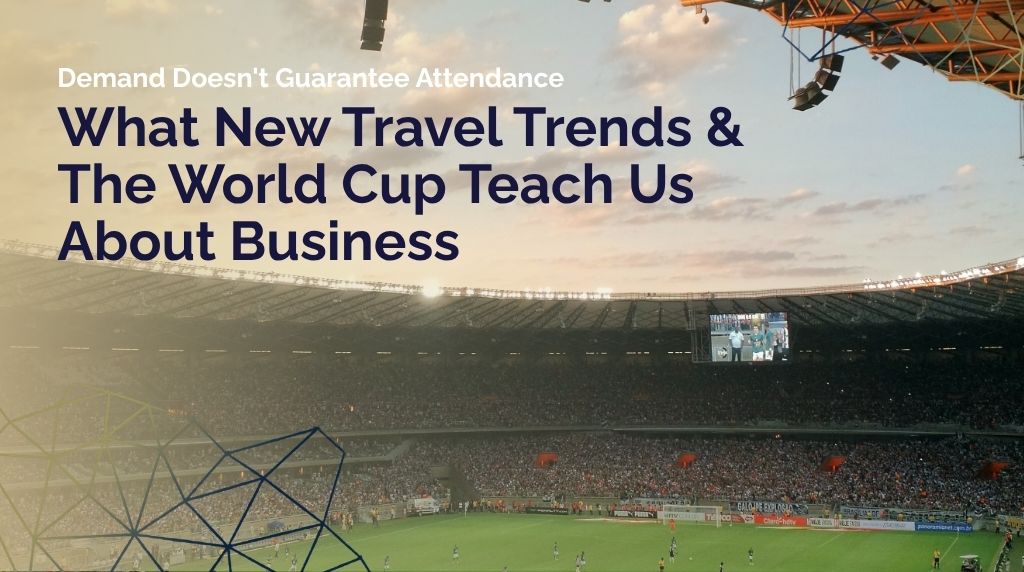

As anticipation built for the 2026 FIFA World Cup, a complex picture emerged that offered a valuable lesson for the entire travel industry. While demand to attend was exceptionally high, so were the logistical hurdles: soaring flight costs, scarce accommodations, and complex multi-city travel plans. This scenario highlights one of the most significant travel trends today: high demand no longer guarantees attendance. For corporate travel planners organizing conferences, retreats, or incentive programmes, the takeaway is clear. The appeal of a destination is no longer enough to overcome a difficult or expensive travel experience.
🧳 Organizing Group Travel?
The post-pandemic surge in travel was characterized by a desire to go anywhere, at almost any cost. That era is over. Travellers, both leisure and corporate, are now more discerning. They evaluate every trip through a lens of intentionality, weighing the return on their investment of time, money, and energy. This shift means that ‘travel friction’—any aspect of a journey that is difficult, inconvenient, or stressful—has become a powerful deterrent. A poorly planned itinerary, confusing booking processes, or inadequate support can quickly turn excitement into reluctance, leading to lower-than-expected attendance for even the most compelling corporate events.

"Attendance is no longer driven by excitement alone. Travellers want experiences that justify the investment of their time and energy."
Understanding today’s travel trends requires looking beyond the destination and focusing on the total traveller experience. Employees and executives now perform a more sophisticated cost-benefit analysis before committing to a business trip. Organizations that fail to recognize this new reality risk investing heavily in events that fall flat due to low participation.
The ticket price or hotel rate is only one part of the equation. Travellers are increasingly sensitive to the total cost of a trip, including ancillary fees, ground transportation, and meals. When an organization’s travel programme is built on a transaction-fee model, where the travel management company (TMC) profits from every booking, change, or cancellation, costs can spiral. This model can inadvertently incentivize complexity. In contrast, a transparent, fixed management fee ensures that the focus remains on finding the most efficient and cost-effective solution for the traveller, not on generating more transactions. It provides budget certainty and aligns the TMC’s goals with the client’s.
The logistical challenges of the World Cup—navigating between host cities like Vancouver, Toronto, and others across North America—mirror the complexities many businesses face when organizing multi-day conferences or retreats. Key friction points include:
A successful Group Travel Management strategy is not about simply booking tickets; it is about architecting a seamless logistical flow that removes these barriers to attendance.
In today’s environment, plans change. Rigid travel policies with punitive cancellation or change fees are a major source of anxiety for travellers. They need to know there is a clear, fair process for making amendments. This is another area where the service model of a TMC is critical. An agency that charges for every single change creates an adversarial relationship. At Inspired Travel Group, our fixed management fee covers all amendments, providing travellers with the confidence that they are supported, not penalized, when circumstances shift.
To combat travel friction and maximize event attendance, organizations must shift their focus from ‘what’ and ‘where’ to ‘how’. The experience of getting to, from, and being at the event is now as important as the event itself.
The most significant travel trend is a shift towards intentionality. Travellers are no longer willing to overlook high costs, complexity, or inconvenience simply for an appealing destination. They are performing a more rigorous cost-benefit analysis on their time and energy. This means that a smooth, well-supported, and flexible travel experience is now critical for ensuring high attendance at corporate events, conferences, and retreats.
A fixed management fee model directly addresses traveller concerns about cost and flexibility. It provides budget predictability by covering all bookings, changes, and support for one transparent price. Unlike transaction-based models that profit from changes and complexity, a fixed fee aligns the travel agency's goals with the client's. This builds trust and gives travellers the confidence that their needs are being met in the most efficient way possible, without hidden costs.
As travel logistics become more complex, the need for expert problem-solving increases. A dedicated human advisor provides a single point of contact who understands the trip's strategic goals and each traveller's needs. They can manage complex itineraries, handle disruptions proactively, and make adjustments seamlessly. This contrasts sharply with impersonal call centres or self-serve portals, which often add stress and inefficiency—key factors that deter travel and reduce event attendance.
The evolving travel trends, amplified by global events like the World Cup, offer a clear directive for Canadian businesses: a great destination is no longer enough. The most successful corporate travel programmes will be those that prioritize a seamless, supportive, and transparent traveller experience. By removing friction from the journey, companies not only ensure better attendance at their events but also demonstrate a fundamental respect for their employees’ time and well-being. This focus on operational excellence is the new competitive advantage in corporate travel.
💡 Need help planning business trips? Work with a corporate travel agency that gets it. Inspired Travel Group handles every detail with expert care. Get Started Today!
