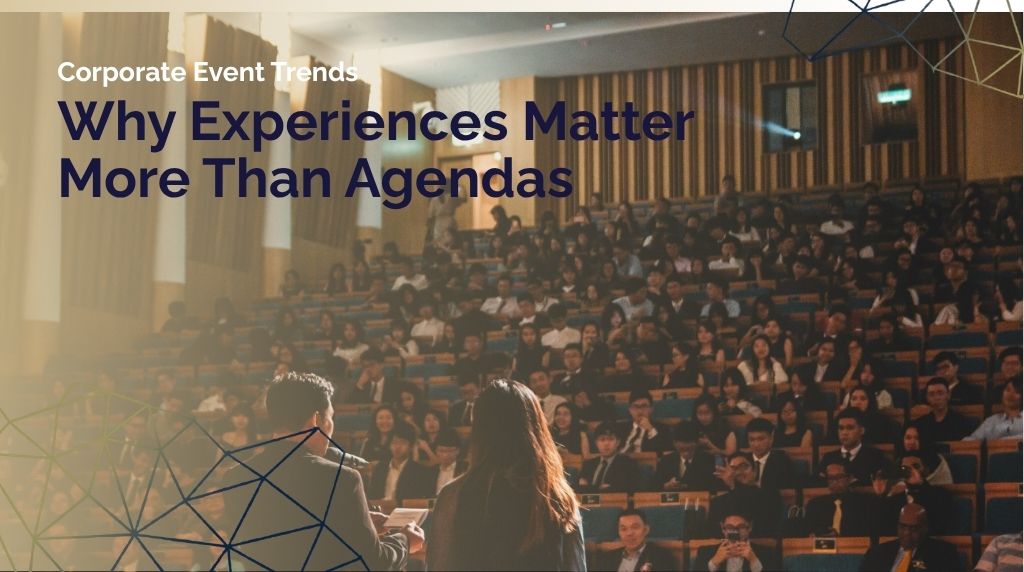

One of the most significant emerging corporate event trends is a fundamental shift in attendee mindset. For decades, organizations operated under the assumption that if an event was announced, people would attend. That assumption is no longer valid. Whether it is an annual conference, a leadership summit, or a team retreat, potential attendees are scrutinizing the value proposition with more diligence than ever before. They are asking critical questions: Is this a valuable use of my time? Will I make meaningful connections? Could this have been an email? This new reality requires a strategic move away from logistics-led agendas and toward human-centric experience design.
🧳 Organizing Group Travel?
The modern employee or client is selective. The rise of remote and hybrid work models has placed a premium on in-person time, while economic pressures demand a clear return on investment for both the company and the individual. An event that feels like a mandatory obligation rather than a compelling opportunity is likely to see diminished attendance and engagement. This is not about adding frivolous perks; it is about respecting the attendee’s most valuable asset: their time. Successful events are now measured not by the number of sessions packed into a day, but by the quality of the connections made, the insights gained, and the cultural alignment achieved.

"People don't attend events because they're mandatory anymore. They attend because they believe the experience will be worth the investment of their time."
To meet these new expectations, event planners must think like experience architects. The goal is to create an environment that feels less like a corporate function and more like a curated gathering with a clear and compelling purpose. This approach is built on several key pillars.
Traditional networking sessions, often characterized by crowded rooms and awkward introductions, are losing their effectiveness. The new focus is on facilitating authentic human connection. This can be achieved through a variety of methods:
The objective is to move beyond exchanging business cards and create the foundation for genuine professional relationships.
Back-to-back keynote speeches and panel discussions lead to attendee fatigue. Progressive corporate event trends show a move towards a more balanced and holistic programme that integrates learning with personal wellbeing.
Holding an event in a generic hotel ballroom, indistinguishable from any other city, is a missed opportunity. The choice of destination and venue is a critical component of the experience itself. A unique setting can transform the entire feel of an event. Consider venues that offer character and a distinct atmosphere, like the historic Carlu in Toronto or a mountain lodge in the Rockies. Incorporating local culture, food, and experiences helps make the event memorable and provides a richer context for attendees. This is about creating a shared memory that bonds the group long after they return home.
While the focus has shifted to experience, the logistical complexity has only increased. Moving dozens or hundreds of people, managing intricate room blocks, and coordinating ground transportation requires meticulous planning and execution. This is where many well-intentioned events falter. An amazing agenda can be completely undermined by a missed airport transfer or a booking error.
This is precisely why a hands-on, logistics-first approach is essential. Managing the complex movement of people is not a task for a self-serve portal or an anonymous call centre. It requires a dedicated human expert who understands the entire scope of the event. At Inspired Travel Group, we provide a dedicated advisor for each group, ensuring a single point of contact responsible for everything from flight coordination to last-minute changes. This human-centric model provides the stable foundation upon which a great experience can be built.
All attendees receive their consolidated itineraries via our Tripscape App, keeping them organized and informed, while our team manages the complex backend operations. This combination of thoughtful technology and expert human oversight ensures the operational side is seamless, allowing your team to focus on the content and the attendees.
The most common mistake is focusing exclusively on the agenda and content while treating travel and logistics as an afterthought. A poor travel experience, such as booking errors or disorganized transfers, can sour an attendee's perception before the event even starts. Seamless logistics are the invisible foundation of a successful event experience.
ROI can be measured through both qualitative and quantitative data. Post-event surveys can gauge attendee satisfaction, perceived value, and the quality of connections made. For sales or client events, you can track subsequent business growth. For internal events, metrics like employee retention rates and engagement scores in the quarters following the event can indicate a positive impact.
Online tools are designed for simple, individual bookings. They cannot manage the complexities of group airfare, multi-room hotel blocks, or coordinated ground transport. A dedicated advisor understands the event's goals and can negotiate with suppliers, manage changes for the entire group, and provide a single point of contact for troubleshooting, which is impossible with automated systems or call centres.
A strategic approach to event spend can yield benefits long after the event concludes. Programmes like the Inspirations Rewards Program allow companies to earn points on their group travel spend. These points can then be redeemed for gift cards, merchandise, or experiences, which can be used for employee recognition or future culture-building initiatives, effectively extending the value of the original investment.
The most impactful corporate event trends point to one clear conclusion: a successful event is an investment in your people and your culture. By shifting the focus from mandatory agendas to memorable experiences, organizations can transform these gatherings from a line-item expense into a powerful tool for driving engagement, fostering innovation, and strengthening relationships. The key is recognizing that while the experience is paramount, it can only be delivered when supported by flawless, professionally managed logistics. When the travel is seamless, the experience can truly begin.
💡 Need help planning business trips? Work with a corporate travel agency that gets it. Inspired Travel Group handles every detail with expert care. Get Started Today!
