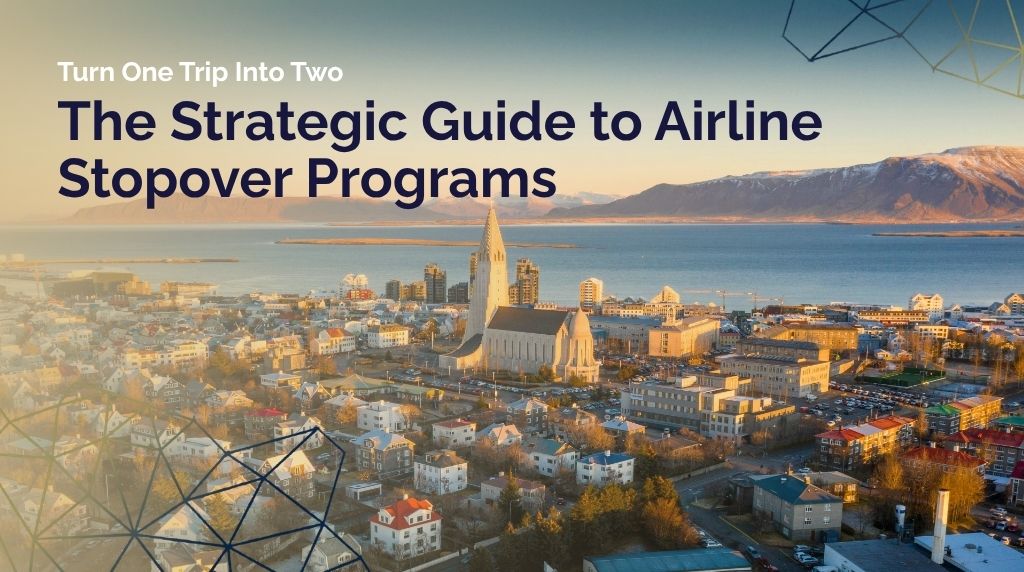

Many seasoned travellers view a connection as a necessary delay—a few hours spent in a transit lounge waiting for the next flight. However, a growing number of carriers are changing this perception with formal airline stopover programs. These initiatives allow passengers on long-haul international routes to spend one or more nights in the airline’s hub city, often without increasing the cost of their airfare. This strategic travel hack transforms a simple layover into a mini-vacation or a productive business extension, offering a way to explore a new city, recover from jet lag, or even schedule meetings in a second destination. For Canadian companies, understanding how to leverage these programmes is a powerful way to maximize the value of their travel budget and enhance the traveller experience.
💼 Want to Take the Stress Out of Business Travel?
👉 Get started with a dedicated corporate travel specialist today.
While the concept of a ‘free’ second destination is appealing, booking a stopover is not always straightforward. Unlike a simple round-trip ticket, multi-city itineraries require careful fare construction. Many online booking engines are not optimized to find or price these specific fares correctly, often returning errors or inflated costs. Successfully building a stopover into a corporate itinerary requires an understanding of airline alliances, fare rules, and ticketing procedures. This is where automated platforms fail and human expertise becomes critical. A travel management professional can navigate the complexity to ensure the itinerary is both compliant with corporate policy and optimized for the traveller’s goals, transforming a logistical challenge into a strategic advantage.

"People often assume the best itinerary is the fastest one. Sometimes it is. But other times, building in a stopover can make the overall trip far more rewarding without adding another international flight."
In airline terminology, a stopover is a deliberate break in a journey that lasts longer than 24 hours on an international itinerary (or more than four hours on a domestic one). It is a planned, ticketed part of the trip, distinct from a short connection. Instead of simply passing through an airport, the traveller clears customs and immigration, leaves the airport, and spends at least one night in the connecting city before continuing to their final destination. Airlines create specific fare rules that permit these extended stays, turning their hub city into a bonus destination for passengers.
Though often used interchangeably, ‘layover’ and ‘stopover’ have distinct meanings in the travel industry. A layover, also known as a connection or transit, is typically a short-term pause required to change planes. A stopover is an intentional, longer stay.
Here is a simple breakdown of the key differences:
| Feature | Layover (Connection) | Stopover |
|---|---|---|
| Duration | Less than 24 hours (international) | More than 24 hours (international) |
| Ticketing | Considered a single journey with a connection | Booked as a multi-city itinerary, but often priced as a round-trip |
| Baggage | Checked through to the final destination | Must be collected at the stopover city |
| Purpose | Operational necessity to change planes | Intentional visit to the connecting city |
Airline stopover programs are sophisticated marketing initiatives rooted in national economic strategy. By encouraging travellers to spend a few days in their hub city, airlines and their national tourism boards achieve several goals:
Several carriers have built a global reputation around their excellent stopover offerings. Here are some of the most notable programmes available to Canadian travellers.
Icelandair is arguably the pioneer of the modern stopover. For decades, it has allowed passengers travelling between North America and Europe to add a stopover in Iceland for up to seven nights at no additional airfare. It is an ideal way to break up a transatlantic flight and explore the country’s unique landscapes, from the Blue Lagoon to the Northern Lights.
The Portugal Stopover programme from TAP Air Portugal is one of the most generous, allowing a stay of up to ten nights in either Lisbon or Porto. The programme is a fantastic way to experience Portugal’s vibrant culture and cuisine before continuing to another European or African destination. They also offer exclusive discounts on hotels and experiences.
Positioning Panama as the ‘Hub of the Americas’, Copa Airlines offers a stopover of up to seven days. This allows travellers flying between North and South America to discover Panama City’s historic old town, modern skyline, and the famous Panama Canal without adding to their airfare.
Turkish Airlines provides one of the most comprehensive stopover programmes. Travellers with a connection of 20 hours or more can receive a complimentary hotel stay: one night for economy class and two nights for business class passengers. It is a perfect opportunity to explore the historical crossroads of Europe and Asia.
Focused on luxury, Qatar Airways offers heavily discounted packages for four- and five-star hotels in Doha for up to four nights. For a minimal cost, travellers can experience world-class museums, traditional souqs, and desert adventures while en route to destinations in Asia, Africa, or Australia.
Etihad’s stopover offerings often include complimentary hotel stays for one or two nights in select hotels in Abu Dhabi. It is an excellent incentive for travellers to explore the capital of the UAE, home to the Sheikh Zayed Grand Mosque, the Louvre Abu Dhabi, and numerous entertainment attractions.
For corporate travel, stopovers can be a strategic tool rather than just a leisure perk. When managed correctly, they can enhance productivity and employee well-being.
Stopovers are best suited for long-haul international trips where schedules are flexible. They are ideal for leadership travel, sales trips with multiple regional targets, or as a reward for employees. Conversely, they are not practical for urgent, short-notice travel, tight meeting schedules, or short domestic trips where the time spent is better used at the primary destination. The key is to plan ahead, as these fares must be booked correctly from the outset.
In most cases, airlines offering official stopover programmes do not charge extra airfare for the stop. However, travellers are responsible for their own accommodations, meals, and activities during the stopover, unless the airline's programme explicitly includes perks like a complimentary hotel. Any additional airport taxes or fees for the stopover city will also apply, though these are typically minimal.
The most reliable way to book a stopover is by using the 'multi-city' or 'multiple destinations' search function on an airline's website or online travel agency. This allows you to enter each leg of the journey separately. However, due to complex fare rules, it is often best to work with a travel management company. A dedicated advisor can ensure the fare is constructed correctly and that you receive all eligible benefits of the programme.
Generally, it is difficult and often costly to add a stopover to a ticket that has already been issued. Stopovers must be built into the itinerary at the time of the original booking. Changing a ticket to include a stopover later would likely require the ticket to be re-priced, often at a much higher fare, in addition to any change fees. It is essential to plan a stopover in advance.
Airline stopover programs demonstrate a smarter way to approach travel. They are not about spending more; they are about extracting more value from the travel that is already necessary. By turning a single journey into a dual-destination experience, companies can enhance employee satisfaction and create more productive business outcomes.
However, capitalizing on these opportunities requires expertise. Navigating the complex fare rules and booking procedures is where a dedicated travel advisor provides immense value. At Inspired Travel Group, we operate on a transparent, fixed management fee model. This means our advisors are motivated to find the best possible itinerary for you, including value-added stopovers, without you having to worry about escalating transaction fees for a more complex booking. Our focus is on providing expert guidance that makes your travel budget work harder. Contact a corporate travel specialist to learn how we can build smarter travel into your company’s plans.
💡 Need help planning business trips? Work with a corporate travel agency that gets it. Inspired Travel Group handles every detail with expert care. Get Started Today!
